
Bitaxe Cooling Solutions: Complete Thermal Management Guide
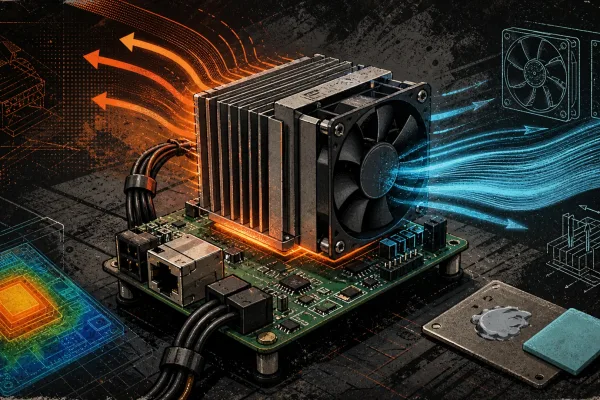
Every ASIC chip is a furnace in miniature. The BM1366 and BM1370 chips inside your Bitaxe are computing trillions of SHA-256 hashes per second, and every single hash generates heat.
$26.99 CAD
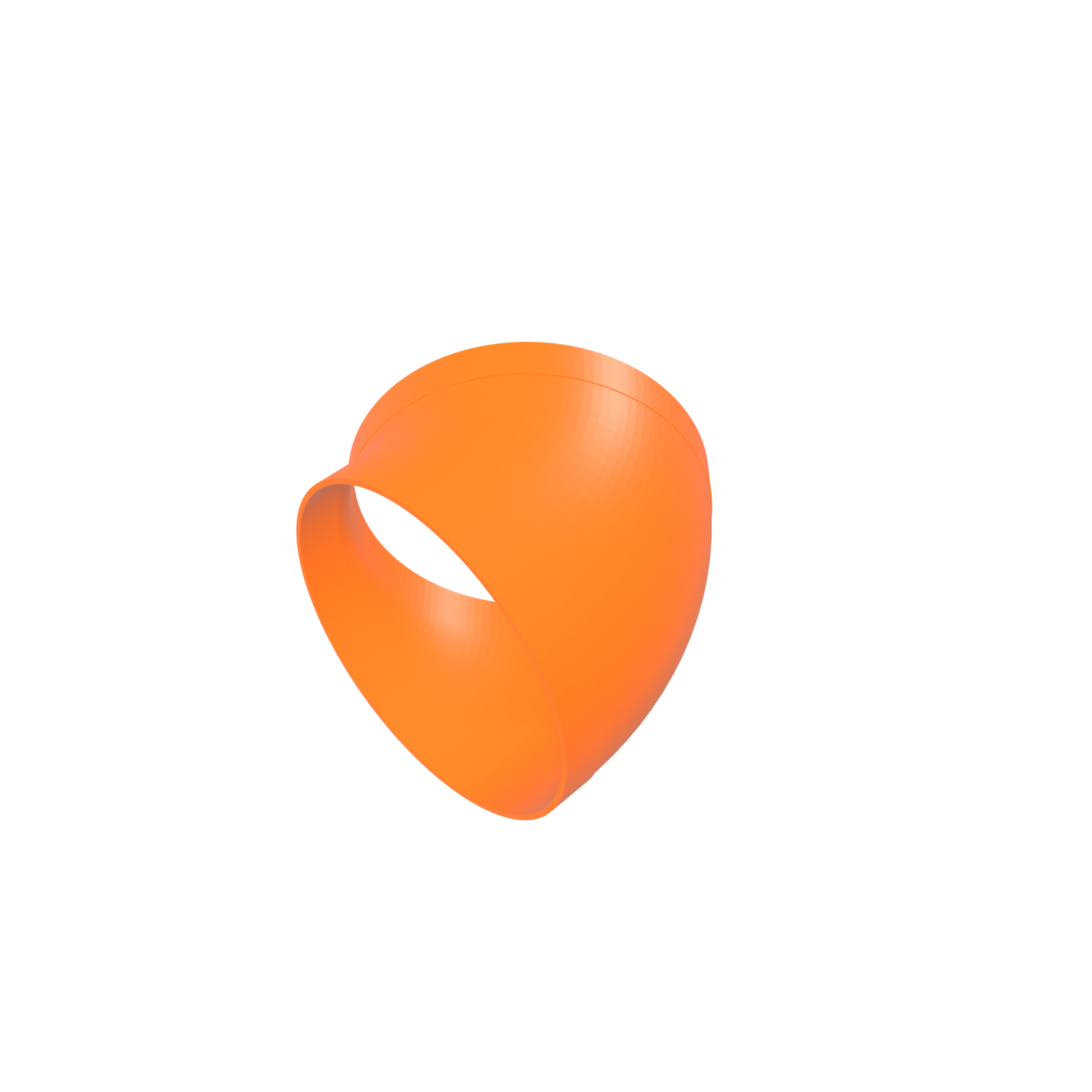
An 8 inch 45 degree duct elbow for trunk lines. You went to 8-inch to move air with minimal restriction; a gentle turn is how you keep that decision intact. PETG, made to order in Montreal, Quebec.
High Demand — Pre-order Now, Ships in 5-10 Business Days
Purchase details
Save 3% when you pay in Bitcoin.
An 8 inch 45 degree duct elbow protects the decision you already made. Nobody runs 8-inch duct by accident: you sized up because you wanted the machine to breathe with as little restriction as the building allows. Dropping a sharp corner into that trunk quietly undoes a good part of it. A gentle 45 changes the run’s direction without asking the air to do anything violent about it.
Full 8-inch bore is carried through the turn, so the cross-section never pinches mid-bend. Standard 8-inch collars on both ends, matching every 8-inch shroud, silencer, coupler, wye and port in the D-Central line.
Drawn in-house and printed as one continuous body. On a fitting this size that also means there is no glued seam sitting in the highest-velocity part of the run.
Standard 8-inch duct on both ends, rigid or flexible. It mates directly to the trunk collar of the 8″ to Dual 6″ Y-Splitter, the inside collar of the 8″ Window Exhaust Port, and the outlet of any 8-inch shroud such as the Antminer S19 / S21 Dual 120 mm to 8″ Duct Shroud. For 6-inch runs the same fitting is the 6″ 45° Duct Elbow. Where a full right angle has to happen inside a tight envelope, use the 8″ 90° Duct Elbow (Compact); where you have room for a sweep in a single fitting, the 8-Inch Long-Radius 90° Airflow Duct Elbow.
Change direction with one. Make a right angle with two and a short straight between them. Chain three or four to walk the trunk around a beam, along a rafter line, or up a wall in shallow steps rather than square corners. Because a 45 can be clocked to any orientation around the duct axis before you tighten the clamps, the same fitting handles a turn sideways, a rise, or any combination of the two — which is what real routing usually needs.
Bend loss scales with how tightly the flow is asked to turn. On a trunk carrying the full output of a hard-working machine, the same fitting geometry acts on more air, so the same mistake costs more. There is also a noise argument: a sharp corner sheds turbulence that the rest of the duct then broadcasts as low-frequency rumble. A gentle turn is quieter for the same reason it is cheaper in pressure, and neither effect requires anything exotic to explain.
| Fits | Standard 8″ duct, both ends |
|---|---|
| Intake | 8″ duct |
| Outlet | 8″ duct at 45° |
| Footprint | 233.6 × 210.4 × 204.8 mm |
| Material | PETG |
| Colour | Black or orange PETG |
| Construction | Single continuous body — no assembly, no fasteners, no glued joints |
| Design files | Open source — free to download, use, modify and redistribute |
| Download | elbow_45_8.zip — STL, CC BY-SA 4.0 licence, installation and safety guide |
| SKU | DC-DUCT-E45-8 |
Every fitting in this line is D-Central Technologies’ own drawing — designed here, measured here, open-sourced here — and each one is released under CC BY-SA 4.0 at the 3D models download center. Free to download, modify, remix, print and sell. This one lives at the 8″ 45° elbow model card. It is a big part and a long build, so plenty of people would rather buy it than tie up a machine for it — both routes are legitimate and both stay open.
Direct file: elbow_45_8.zip, containing the STL, the CC BY-SA 4.0 licence, and the installation and safety guide. This page sells the finished elbow instead: made to order in PETG, in black or in orange, shipped from Montreal, Quebec, collars cut to the same standard as the rest of the run. The download costs nothing and always will; the part and D-Central’s fund page are what fund the next drawing.
Every fitting in the chain from one shop, cut to one standard: see the D-Central shroud and ducting system.
Because on an 8-inch line the fitting is acting on the largest volume of air in your system, so bend geometry has the most leverage there. Two 45s turn the same corner with materially less resistance than one sharp 90. Where the space exists, it is the better build every time.
Yes, and it is a normal way to route a trunk around structure. Put a short straight between each pair so the flow reattaches rather than turning continuously. Four shallow steps with straights between them behave far better than two hard corners, even though the total turning angle is larger.
Support the duct either side of it rather than the elbow itself. Eight-inch flex is heavy enough that an unstrapped run will hang its weight on whatever fitting is nearest, which loads the clamps sideways and eventually opens the joint. A strap within about half a metre of each collar is enough.
Take the compact 8″ 90° elbow, or the long-radius 90 if you have clearance for a sweep but not for two separate fittings and a straight. A turn that physically fits beats an elegant pair that does not.
It mates to any standard 8-inch duct, which is what most inline fan housings accept on both sides. Give the fan a straight section rather than putting the elbow directly on its inlet: fans dislike being fed swirling air, and a stub of duct in front of the inlet is cheap.
| Weight | 327 g |
|---|---|
| Dimensions | 23.36 × 20.48 × 21.04 cm |
| Colour | Black, Orange |
Only logged in customers who have purchased this product may leave a review.
Every ASIC chip is a furnace in miniature. The BM1366 and BM1370 chips inside your Bitaxe are computing trillions of SHA-256 hashes per second, and every single hash generates heat.
Every ASIC miner ships with the same cooling strategy: move massive volumes of air across heatsinks using fans that sound like a jet turbine at close range. It works.
Most Bitcoin merchandise is mass-produced overseas with no connection to the culture. D-Central Technologies 3D prints every collectible in Montreal, Quebec — made by actual Bitcoin miners since 2016. Discover our Bitcoin Chess Set, Honeybadger figurine series, 3D filament paintings, and 140+ unique items you cannot find anywhere else.
Last reviewed August 19, 2026.

Reviews
There are no reviews yet.