
3D-Printed Bitcoin Mining Parts: Free STL Files and What’s Worth Printing
Home » 3D-Printed Bitcoin Mining Parts: Free STL Files and What’s Worth Printing There has never been a better time to own a 3D printer…
$24.99 CAD
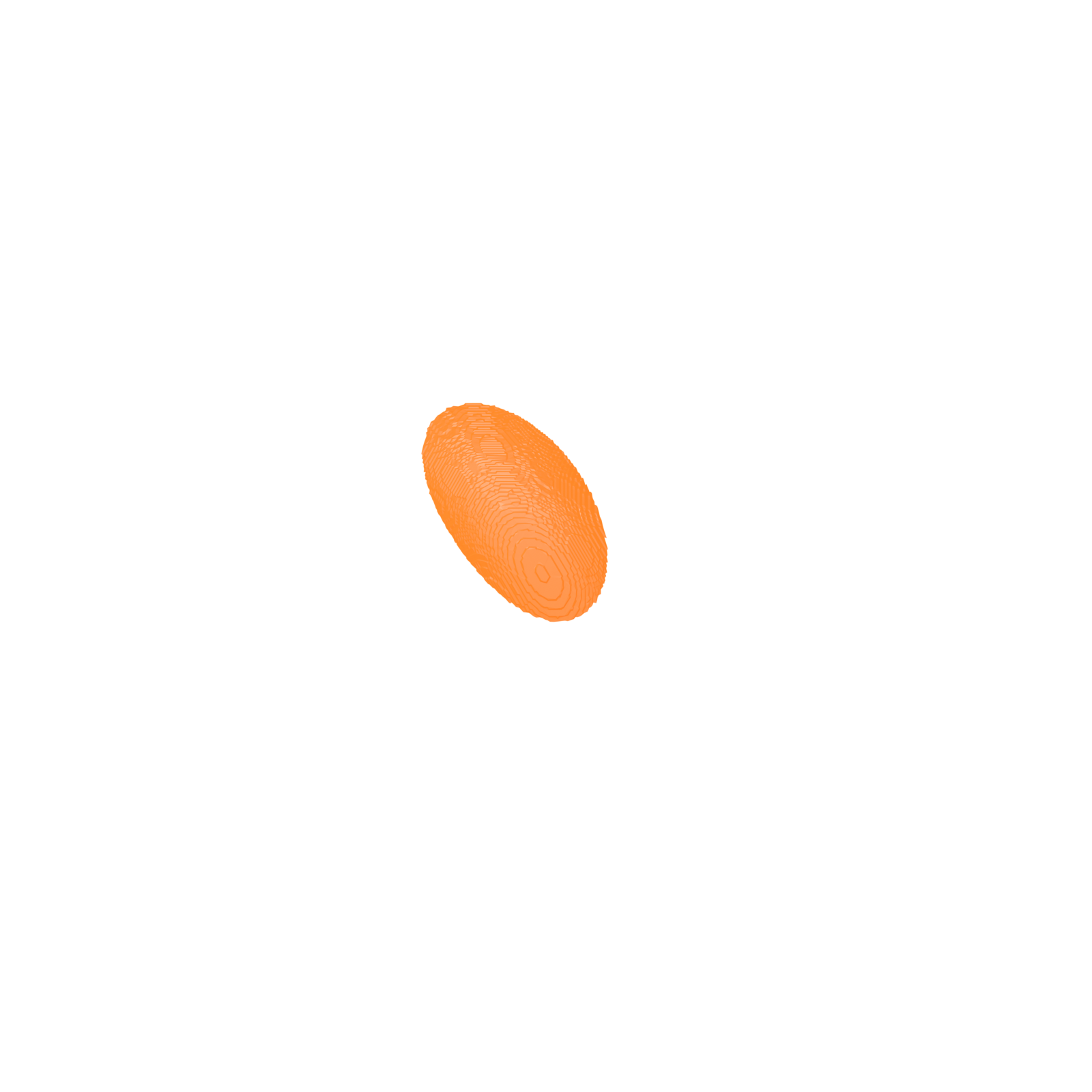
8-inch long-radius 90-degree duct elbow: a sweeping bend for runs with room to turn properly. Published duct-loss data puts a long-radius bend at 0.40 against 1.04 for a sharp 90. PETG, made to order in Montreal, Quebec.
High Demand — Pre-order Now, Ships in 5-10 Business Days
Purchase details
Save 3% when you pay in Bitcoin.
This 8-inch long-radius 90-degree duct elbow is built for one thing: turning a full-size exhaust run through a right angle while giving up as little as possible in the process. The bend radius is 175 mm, an R/D of 0.858, and both ends are the line’s standard 8-inch rigid sockets, so it drops into an existing run in place of a sharp corner.
Bend loss is one of the few things in duct design that is genuinely settled engineering. Published duct-loss data puts a long-radius round elbow of this proportion at a loss coefficient of about 0.40, against 1.04 for a compact, tightly mitred 90 and 0.92 for two 45-degree elbows stacked in series. Those numbers come from the published literature on duct fittings, not from a claim of ours — the physics is that a sweeping turn keeps the airstream attached to the outer wall, while a sharp turn separates the flow and leaves a stalled, turbulent core doing no useful work.
The cost is space. This elbow occupies roughly 304 × 209 × 304 mm, which is real volume behind a machine. Give it that room and it is the best turn in the line; where the duct has to fold into a tight shelf gap or hug a wall, the compact 90 is the part that fits.
Working in 6-inch duct? The 6″ 90° Duct Elbow (Compact) is the 6-inch right angle in the line. Short of space at 8 inches? Take the 8″ 90° Duct Elbow (Compact) instead and keep the run tight to the wall.
Air moving down a duct has momentum, and momentum does not like corners. At a tight bend the stream cannot follow the inside wall, so it separates: a recirculating pocket forms on the inner radius, the effective cross-section shrinks, and the fan behind it has to push against pressure it never sees on a straight run. Lengthening the radius keeps the flow attached the whole way round, so the section stays open through the turn and the pressure penalty falls to a fraction of what the sharp version costs — which is exactly what the published coefficients describe. Two 45-degree elbows in series get part of the way there, because they split the turn into two smaller ones with a straight in between, but they still cost more than one continuous sweep and take two joints to do it.
| Fits | 8-inch rigid snap-lock pipe at both ends — flex duct via the 8-inch flex adapter |
|---|---|
| Intake | 8-inch rigid socket |
| Outlet | 8-inch rigid socket, 90 degrees from the intake |
| Bend geometry | 175 mm radius, R/D 0.858 — loss coefficient 0.40 per published duct-loss data, against 1.04 for the compact 90 and 0.92 for two 45s in series |
| Footprint (mm) | 304.2 × 208.8 × 304.2 |
| Material | PETG |
| Colour | Black or orange PETG |
| Construction | Single piece, no fasteners or inserts |
| Design files | D-Central in-house design, released open source under CC BY-SA 4.0 |
| Download | elbow_90_8_v2.zip — STL, CC BY-SA 4.0 licence, installation and safety guide |
| SKU | DUC-ELB90-8-AF |
| Fulfilment | Made to order in Montreal, Quebec |
Long-radius bends are the fitting hardware stores are worst at stocking at this size, so D-Central Technologies drew one — the 175 mm radius, the sockets, the wall sections — and gave it away. The design is ours, released under CC BY-SA 4.0 through the 3D models download center, free to download, modify, remix, print and sell, radius and all. The model card is the 8-inch long-radius 90° elbow.
The file is elbow_90_8_v2.zip, with the STL, the CC BY-SA 4.0 licence and the installation and safety guide inside. Making a 304 mm sweep yourself is a serious job, which is why this listing exists: the finished elbow, made to order in PETG in Montreal, Quebec, black or orange, with sockets matched to the rest of the 8-inch family. The file costs nothing today and nothing later — the part you buy, or D-Central’s fund page, is what keeps the open design work going.
Build the full run from the D-Central shroud and ducting system.
Space decides. On published duct-loss data a long-radius bend of this proportion sits at 0.40 against 1.04 for a compact one, so the sweep is the better turn wherever it fits. It needs roughly 304 × 209 × 304 mm. If your run turns inside a rack gap or against a wall, the 8″ 90° Duct Elbow (Compact) is the one that will physically go in.
Yes, on both counts. Published figures put two 45s in series at 0.92 against 0.40 for a single long-radius bend, and the pair also needs a coupler and four joints instead of two. Two 8″ 45° Duct Elbows remain useful for offsetting a run sideways, which is a different job.
No — both ends are rigid sockets, and a flex core will not seat square inside one. Put an 8-Inch Flex Duct Adapter in the socket and slip the flex over its collar. That is the standard way this line moves between rigid fittings and flex duct.
As far from the shroud outlet and from an inline fan’s inlet as the layout allows. A turn placed immediately at either point makes both work harder, because the air arriving is not yet running straight. A short length of straight pipe before the bend is worth more than most people expect.
It is the heaviest, stiffest fitting in the 8-inch family, and PETG holds its shape in an exhaust stream. Even so, corners are where a run’s weight concentrates: strap the pipe either side of the elbow so the joints stay square and the load goes into the structure rather than the fitting.
| Weight | 644 g |
|---|---|
| Dimensions | 30.42 × 20.88 × 30.42 cm |
| Colour | Black, Orange |
Only logged in customers who have purchased this product may leave a review.
Home » 3D-Printed Bitcoin Mining Parts: Free STL Files and What’s Worth Printing There has never been a better time to own a 3D printer…
Search for a duct adapter for your miner and you will drown in Antminer gear. Dual-120 shrouds, 120 mm silencers, 120 mm filter rings — an entire…
In any mining setup, the crux of your success lies in the efficient functioning of your mining hardware. Acknowledging this critical tenet, we turn to a paramount facet of mining…
Last reviewed August 19, 2026.
Reviews
There are no reviews yet.