
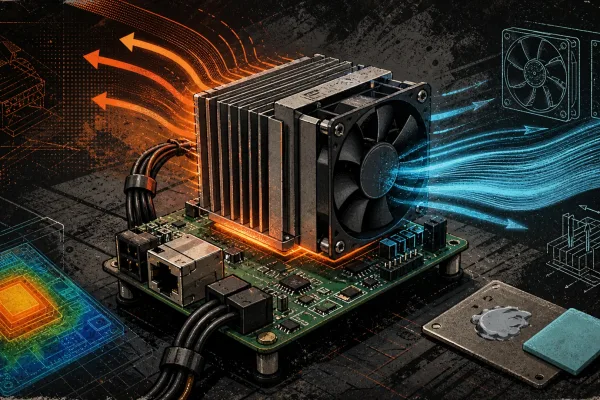
Bitaxe Cooling Solutions: Complete Thermal Management Guide
Every ASIC chip is a furnace in miniature. The BM1366 and BM1370 chips inside your Bitaxe are computing trillions of SHA-256 hashes per second, and every single hash generates heat.
$36.99 CAD
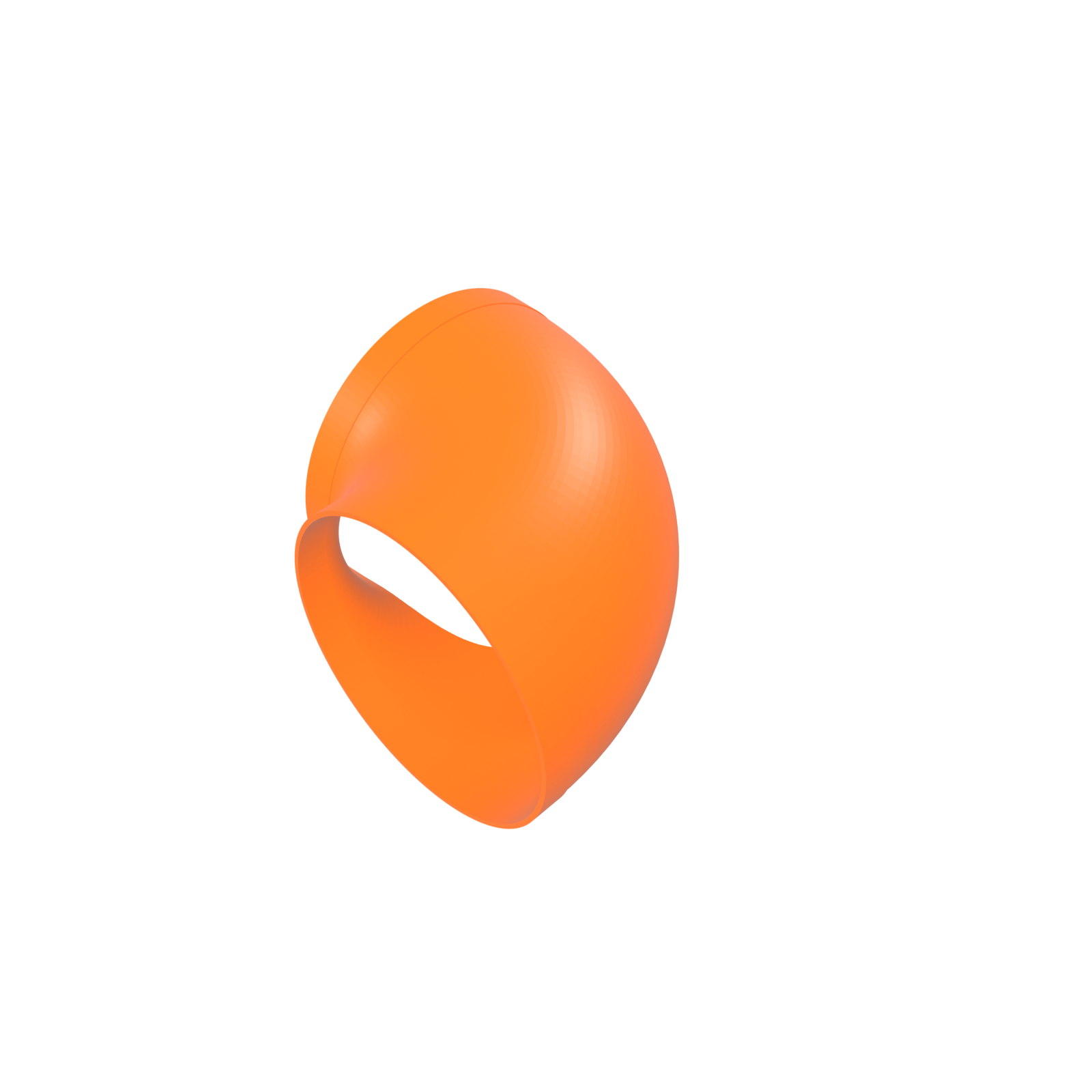
A 90 degree duct elbow in 8 inch, kept as compact as the diameter allows. For trunks that have to turn hard because the building says so: joist bays, wall drops, rack backs. PETG, made to order in Montreal, Quebec.
High Demand — Pre-order Now, Ships in 5-10 Business Days
Purchase details
Save 3% when you pay in Bitcoin.
A 90 degree duct elbow in 8 inch is what you fit when the building has already decided the route. Joists run where they run. The wall cavity is the width it is. The trunk has to drop vertically the moment it clears the machine, and there is no negotiating with any of it. This elbow takes that right angle inside 249.2 × 249.2 × 210.4 mm, about as tight as an 8-inch turn can be drawn while keeping the bore fully open.
Standard 8-inch collars on both ends, mating every 8-inch shroud, silencer, coupler, wye and port in the line. Printed as one continuous body, so there is no glued seam in the part of the run that works hardest.
Where the layout gives you length instead of a corner, the 8″ 45° elbow and the 8-Inch Long-Radius 90° Airflow Duct Elbow are the fittings for it.
Standard 8-inch duct on both ends, rigid or flexible. It is the right part for wall drops, joist clearances, rack backs, and any turn where the envelope is fixed by structure rather than by choice. It is the wrong part for a long trunk with room to spare, where two 45s or a long-radius sweep will serve you better. On 6-inch runs, the equivalent is the 6″ 90° Duct Elbow (Compact).
Fit it to the fixed end first — the shroud, the wall sleeve, whichever side you will not be able to reach afterwards — clock it to the outgoing direction, and clamp. Then bring the run onto the second collar and clamp that. Because the part carries real weight in 8-inch, strap the duct on both sides within about half a metre so the elbow is sealing the joint rather than hanging from it.
If the run also has to change size near the corner, turn first and reduce second with the 8″ to 6″ reducer. Reducing before the bend means the turn happens in the smaller, more restrictive cross-section, which is the more expensive order to do it in.
Eight-inch duct is big, and a right angle in it is bigger still. The alternative to a fitting that fits the bay is a run that gets forced — flex duct crushed against a joist, an elbow tilted so the collars load their clamps sideways, a trunk kinked to squeeze past a stud. Every one of those is a worse restriction than the bend itself, and every one of them leaks. Keeping the turn inside a known envelope keeps the rest of the run round, straight and sealed.
| Fits | Standard 8″ duct, both ends |
|---|---|
| Intake | 8″ duct |
| Outlet | 8″ duct at 90° |
| Footprint | 249.2 × 249.2 × 210.4 mm |
| Material | PETG |
| Colour | Black or orange PETG |
| Construction | Single continuous body — no assembly, no fasteners, no glued joints |
| Design files | Open source — free to download, use, modify and redistribute |
| Download | elbow_90_8.zip — STL, CC BY-SA 4.0 licence, installation and safety guide |
| SKU | DC-DUCT-E90-8 |
D-Central Technologies designed this elbow, drew every millimetre of its envelope, and released the file open source under CC BY-SA 4.0 at the 3D models download center: download it, modify it, remix it, print it, sell what you print. Its own card is the compact 8″ 90° elbow model. An 8-inch 90 is a demanding thing to make well at home, which is precisely why the drawing should be free even if the part is not.
The file is elbow_90_8.zip — STL, CC BY-SA 4.0 licence, installation and safety guide. What this page sells is the finished elbow: made to order in PETG in black or orange, shipped from Montreal, Quebec, cut to the same collar standard as the rest of your run. The download stays free regardless; buying the part, or backing D-Central’s fund page, is what puts the next drawing on the board.
The full chain from shroud to wall, one collar standard throughout: see the D-Central shroud and ducting system.
Turn first. A bend in 8-inch duct is less costly than the same bend in 6-inch, so do the direction change while you still have the larger cross-section and put the reducer downstream of it. The only reason to reverse that order is if the corner physically will not take an 8-inch fitting.
Check the footprint row against your actual bay before you build the route. The turn needs 249.2 mm in the plane of the bend and 210.4 mm across it, plus room for a clamp on each collar. Bays vary by building far more than people expect, which is why the number is published rather than described.
Strap the duct within about half a metre either side of the elbow, not the elbow itself. Loaded correctly, the clamps only have to seal. Loaded badly, they are holding several kilograms of duct in shear and they will eventually let go of it.
Yes, and behind a rack-mounted machine it is often the only place it will go. Expect a little more turbulence than if it sat further down the run, and give the outgoing side a straight section before anything else happens to the air. If the goal is to move the outlet sideways rather than turn it, an offset shroud does that job at the source.
Two 8″ 45° elbows with a short straight between them, or the single-fitting long-radius 90 if you would rather have one joint than three. Both need more length than this part; that is the whole trade.
| Weight | 493 g |
|---|---|
| Dimensions | 24.92 × 24.92 × 21.04 cm |
| Colour | Black, Orange |
Only logged in customers who have purchased this product may leave a review.
Every ASIC chip is a furnace in miniature. The BM1366 and BM1370 chips inside your Bitaxe are computing trillions of SHA-256 hashes per second, and every single hash generates heat.
Every ASIC miner ships with the same cooling strategy: move massive volumes of air across heatsinks using fans that sound like a jet turbine at close range. It works.
Most Bitcoin merchandise is mass-produced overseas with no connection to the culture. D-Central Technologies 3D prints every collectible in Montreal, Quebec — made by actual Bitcoin miners since 2016. Discover our Bitcoin Chess Set, Honeybadger figurine series, 3D filament paintings, and 140+ unique items you cannot find anywhere else.
Last reviewed August 19, 2026.

Reviews
There are no reviews yet.