
Bitaxe Cooling Solutions: Complete Thermal Management Guide
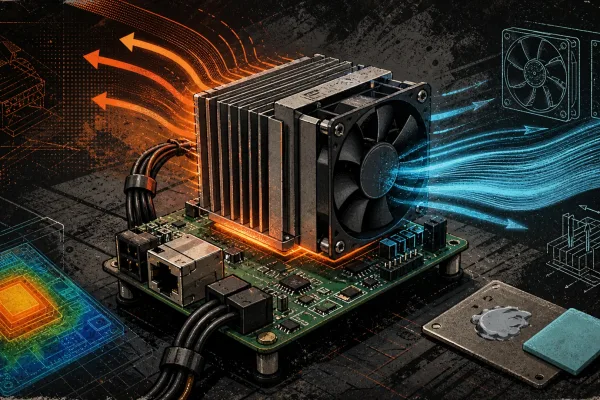
Every ASIC chip is a furnace in miniature. The BM1366 and BM1370 chips inside your Bitaxe are computing trillions of SHA-256 hashes per second, and every single hash generates heat.
$27.99 CAD
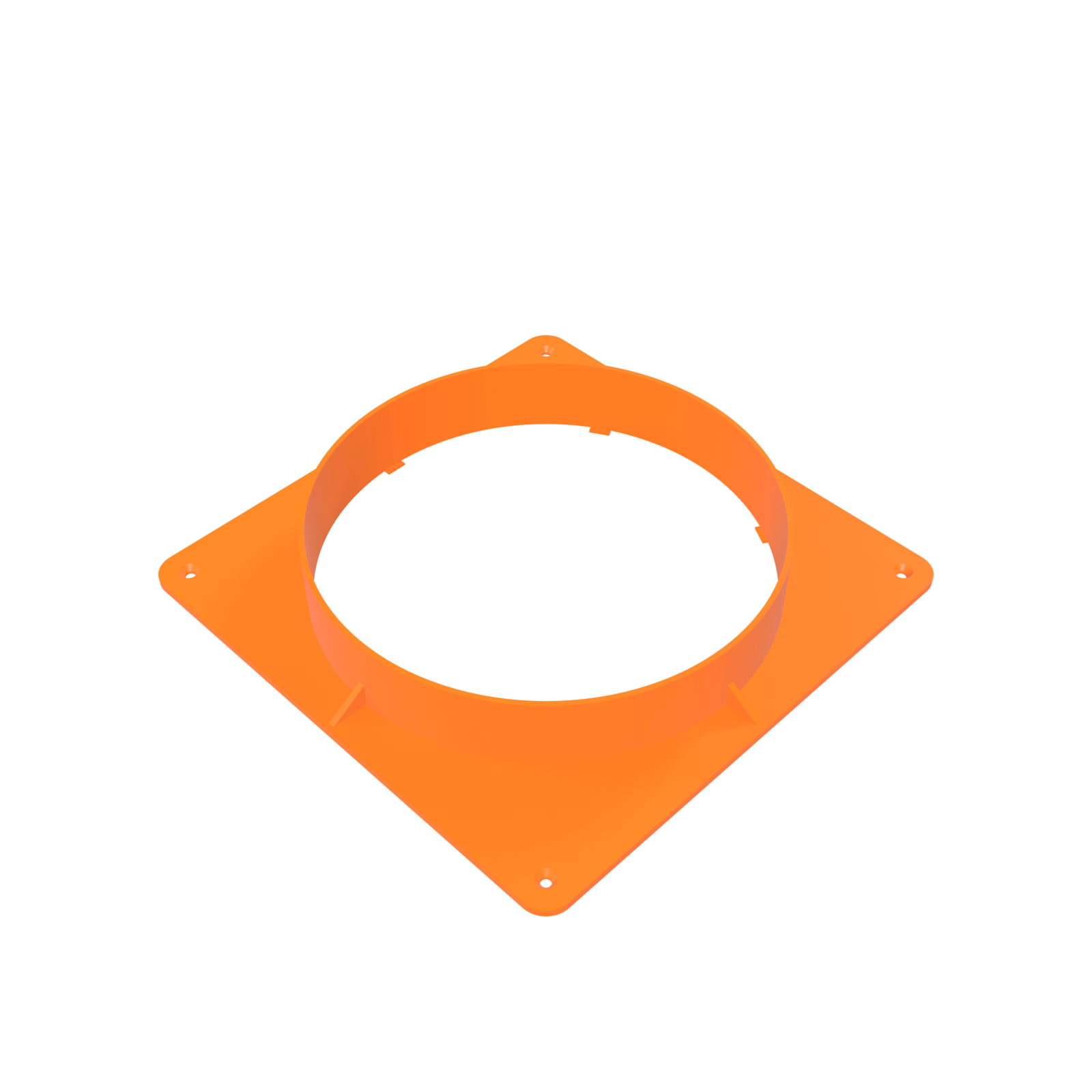
An 8 inch window vent port that terminates a trunk at full size, so you do not throw away the cross-section at the very last fitting. Gasket groove, screen retention, through-panel flange. PETG, made to order in Montreal, Quebec.
High Demand — Pre-order Now, Ships in 5-10 Business Days
Purchase details
Save 3% when you pay in Bitcoin.
An 8 inch window vent port exists to stop a common and self-defeating mistake: running a generous 8-inch trunk the whole way across a building and then pushing it out through a 6-inch or 4-inch hole because that was the fitting on the shelf. A restriction at the end of a run acts on the whole system exactly as much as one at the start. If you paid for 8-inch, this is how you keep it.
Flanged plate, 8-inch collar on the inside face, gasket groove around the flange, insect-screen retention on the outer face. It mounts through a panel or a wall penetration and terminates the run without a single reduction. The body is 39 mm deep front to back, so even a 248 mm flange sits close against the panel rather than projecting into the room or fouling a closing sash.
Same through-panel principle as the smaller port, scaled to the trunk size that a hard-working machine, or a shared exhaust carrying two of them, actually needs.
Standard 8-inch duct on the inside collar, rigid or flexible. The flange mounts through a window filler panel or a permanent wall sleeve. It takes the trunk side of the 8″ to Dual 6″ Y-Splitter directly, which is what makes a two-machine, one-hole install possible.
If your run is 6-inch, do not oversize the port for the sake of it — use the 6″ Window Exhaust Port and keep the seal tight. If the final approach to the window is flex duct, the 8-Inch Flex Duct Window Vent Port is drawn around that collar instead.
Mount it through a filler panel cut to the sash opening, or through a permanent wall penetration if the install is staying. Seat a gasket or foam strip in the flange groove, fix the panel, fit the screen on the outside, and band-clamp the trunk to the inside collar. Because an 8-inch port and a metre of 8-inch duct together carry real weight, support the run near the port rather than letting the panel hold it.
Where the trunk has to turn immediately before the wall, put an 8″ 45° elbow in ahead of the port rather than bending the duct against the panel.
Airflow in a duct system is limited by the tightest point in it, wherever that point happens to be. A run that is generous for four metres and then squeezed at the last 100 mm behaves like a squeezed run. That final fitting is also the one place where a restriction makes noise you will actually hear, because it is on the outside of the wall pointing at the neighbours. Terminating at 8-inch keeps both the airflow and the quiet you built the run for.
| Fits | Standard 8″ duct — terminates a run at a window or panel |
|---|---|
| Intake | 8″ duct |
| Outlet | Open exhaust |
| Sealing | Gasket groove in the flange face |
| Screen | Insect-screen retention on the outer face |
| Footprint | 248 × 248 × 39 mm |
| Material | PETG |
| Colour | Black or orange PETG |
| Construction | Single continuous body — no assembly, no fasteners, no glued joints |
| Design files | Open source — free to download, use, modify and redistribute |
| Download | window_port_8in.zip — STL, CC BY-SA 4.0 licence, installation and safety guide |
| SKU | DC-DUCT-WIN-8 |
Every design in this line is D-Central Technologies’ own — we drew this flange, we open-sourced it, nobody else did — and every one is published under CC BY-SA 4.0 at the 3D models download center: download, modify, remix, print, sell. Straight to this part: the 8″ window exhaust port model. Window openings are the least standard dimension in anybody’s house, so the flange is exactly the sort of thing worth editing yourself.
The file is window_port_8in.zip and it holds the STL, the CC BY-SA 4.0 licence, and the installation and safety guide. This page is for the finished port, made to order in PETG and shipped from Montreal, Quebec, in black or in orange. The drawing costs nothing, now or later; buying the port or giving at D-Central’s fund page is what funds the next one.
One vendor for the shroud, the trunk and the wall: see the D-Central shroud and ducting system.
The trunk. If the duct arriving at the wall is 8-inch, this is the part. If it is 6-inch, the 6″ port is the right one and an oversized port buys you nothing but a bigger hole to seal. The only fitting that should change size is a reducer, and it should be as late as the layout allows.
Yes. The flange is drawn for through-panel mounting, and a wall is simply a more permanent panel. Sleeve the penetration, seat the flange on a gasket, and seal the outside perimeter appropriately for your climate. In a cold climate, pay attention to where warm exhaust air meets cold framing.
Plywood is the most forgiving and takes screws well. Acrylic looks better in a living space and lets light through, but needs care when cutting the port hole. Rigid foam board is the fastest and the best insulator, and wants a plywood or ply-faced washer under the flange so the fixings have something to bite into.
That is the layout this port was sized for. Merge the two 6-inch machine lines into one 8-inch trunk with the 8″ to dual 6″ wye and terminate the trunk here. Be aware that a shared trunk couples the machines together, so the stronger fan set will push back against the weaker one.
Put a damper in the line. A commercial backdraft damper does the job today, and the print-in-place blast gate is in development for the same purpose plus branch balancing. Without one, a stopped machine leaves an open 8-inch path to the outside.
| Weight | 203 g |
|---|---|
| Dimensions | 24.8 × 24.8 × 3.9 cm |
| Colour | Black, Orange |
Only logged in customers who have purchased this product may leave a review.
Every ASIC chip is a furnace in miniature. The BM1366 and BM1370 chips inside your Bitaxe are computing trillions of SHA-256 hashes per second, and every single hash generates heat.
Every ASIC miner ships with the same cooling strategy: move massive volumes of air across heatsinks using fans that sound like a jet turbine at close range. It works.
Most Bitcoin merchandise is mass-produced overseas with no connection to the culture. D-Central Technologies 3D prints every collectible in Montreal, Quebec — made by actual Bitcoin miners since 2016. Discover our Bitcoin Chess Set, Honeybadger figurine series, 3D filament paintings, and 140+ unique items you cannot find anywhere else.
Last reviewed August 19, 2026.

Reviews
There are no reviews yet.