
Bitaxe Cooling Solutions: Complete Thermal Management Guide
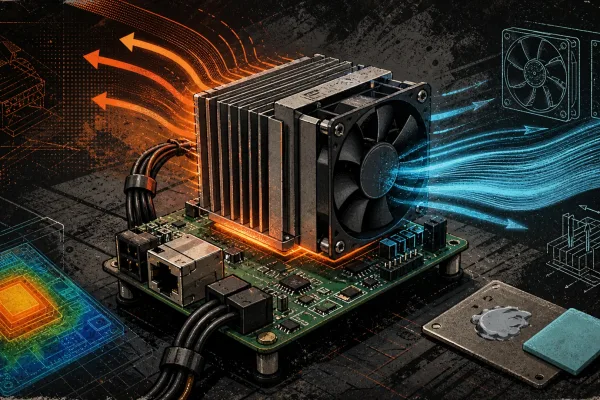
Every ASIC chip is a furnace in miniature. The BM1366 and BM1370 chips inside your Bitaxe are computing trillions of SHA-256 hashes per second, and every single hash generates heat.
$26.99 CAD
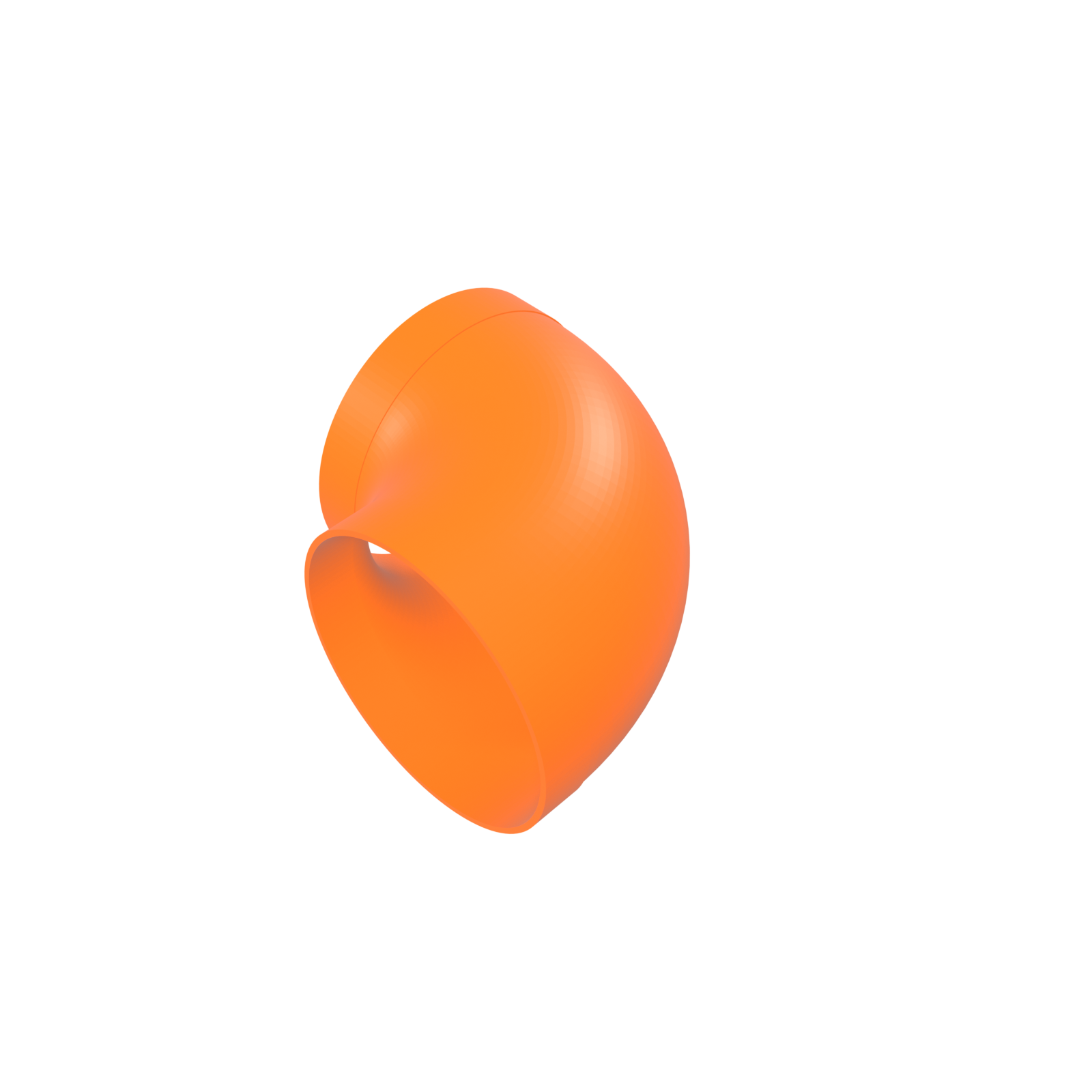
A 6 inch 90 degree duct elbow drawn to the smallest envelope in the line, for the turn that has to happen right behind the machine. Fits where a rack, a wall or a shelf leaves you nothing. PETG, made to order in Montreal, Quebec.
High Demand — Pre-order Now, Ships in 5-10 Business Days
Purchase details
Save 3% when you pay in Bitcoin.
A 6 inch 90 degree duct elbow in compact form is the fitting for the space you actually have. The machine is 15 cm off the wall. The rack has a solid back. There is a shelf directly above the shroud outlet. In those installs the elegant answer, two 45s with a straight between them, simply does not exist — and the run still has to turn.
This part turns it inside 203.8 × 203.8 × 159.6 mm, which is about as tight as a right angle can be drawn in 6-inch duct while keeping the bore open the whole way through. Standard 6-inch collars on both ends, so it drops into the same run as everything else in the line.
Standard 6-inch duct on both ends, rigid or flexible, and every 6-inch fitting, shroud and silencer in the line. This is the elbow for rack backs, wall drops, joist bays, cabinet interiors and any run that turns immediately behind the machine.
It is not the elbow for a long, bend-heavy run with room to spare — that is what pairs of 45° elbows are for. If the run is 8-inch rather than 6-inch, the equivalent part is the 8″ 90° Duct Elbow (Compact).
Clamping the machine-side joint before the run is attached is the difference between a five-minute job and a knuckle-bruising one, because the space behind a mounted miner disappears the moment the duct is in it.
A right angle that fits is worth more than a gentler turn that does not. Forcing a long-radius elbow into a bay it does not suit means kinking the flex duct on either side of it, and a kinked flex duct is a far worse restriction than any fitting. The compact 90 keeps the bore fully open through the turn and takes the whole direction change inside a known envelope, so the ducting either side of it stays straight and round.
| Fits | Standard 6″ duct, both ends |
|---|---|
| Intake | 6″ duct |
| Outlet | 6″ duct at 90° |
| Footprint | 203.8 × 203.8 × 159.6 mm |
| Material | PETG |
| Colour | Black or orange PETG |
| Construction | Single continuous body — no assembly, no fasteners, no glued joints |
| Design files | Open source — free to download, use, modify and redistribute |
| Download | elbow_90_6.zip — STL, CC BY-SA 4.0 licence, installation and safety guide |
| SKU | DC-DUCT-E90-6 |
The compact 90 is D-Central Technologies’ own geometry: we designed the part, drew the envelope, and open-sourced the result under CC BY-SA 4.0 at the 3D models download center, along with the rest of the ducting family. Its card is the compact 6″ 90° elbow model. Free to download, modify, remix, print and sell — if your bay is an odd shape, take the file and change the envelope to suit it. That is what an open file is for.
Download it as elbow_90_6.zip, which carries the STL, the CC BY-SA 4.0 licence, and the installation and safety guide. This listing is the finished elbow, made to order in PETG and shipped from Montreal, Quebec; black and orange are both stocked colours. The file stays free permanently; buying the printed part, or giving through D-Central’s fund page, is what draws the next fitting in the line.
Fittings that mate on the first try because they came from the same drawing set: see the D-Central shroud and ducting system.
Work from the footprint row above: 203.8 mm in the two directions of the turn and 159.6 mm across. Add the depth of your shroud collar and a hand’s width to get a clamp on. If you have less than that, an offset shroud that moves the outlet before the duct starts is usually the better move than trying to turn tighter.
Clearance decides it. Two 6″ 45° elbows with a short straight between them turn the corner in two gentler stages, and need a good deal more length to do it. This one takes the whole turn inside 203.8 × 203.8 × 159.6 mm. If both layouts fit, take the pair; if only one fits, the choice has already been made for you.
Yes. Clock the elbow before you clamp it and the outlet can face down, up or either side. A downward turn at the machine into a vertical drop is one of the most common layouts in a garage or basement, and it keeps the duct out of the walkway.
Count them and be deliberate. On a short run out through a nearby wall with a healthy fan, one or two make no practical difference. On a run that climbs a storey and turns three or four times, the bends become the dominant restriction and it is worth converting the ones with space into 45s.
Yes, the 8″ 90° Duct Elbow (Compact). If your run changes size near the corner, turn in the larger duct first and step down afterwards with the 8″ to 6″ reducer.
| Weight | 333 g |
|---|---|
| Dimensions | 20.38 × 20.38 × 15.96 cm |
| Colour | Black, Orange |
Only logged in customers who have purchased this product may leave a review.
Every ASIC chip is a furnace in miniature. The BM1366 and BM1370 chips inside your Bitaxe are computing trillions of SHA-256 hashes per second, and every single hash generates heat.
Every ASIC miner ships with the same cooling strategy: move massive volumes of air across heatsinks using fans that sound like a jet turbine at close range. It works.
Most Bitcoin merchandise is mass-produced overseas with no connection to the culture. D-Central Technologies 3D prints every collectible in Montreal, Quebec — made by actual Bitcoin miners since 2016. Discover our Bitcoin Chess Set, Honeybadger figurine series, 3D filament paintings, and 140+ unique items you cannot find anywhere else.
Last reviewed August 19, 2026.
We use cookies to improve your experience and analyze site traffic. Privacy Policy
Choose which cookies you allow. Essential cookies are required for the site to function and cannot be disabled.
Required for basic site functionality, shopping cart, and security. Always active.
Help us understand how visitors use our site so we can improve your experience. Includes Google Analytics.
Used to deliver relevant ads and track campaign performance across platforms.

Reviews
There are no reviews yet.