Home Mining Electrical Readiness Checklist
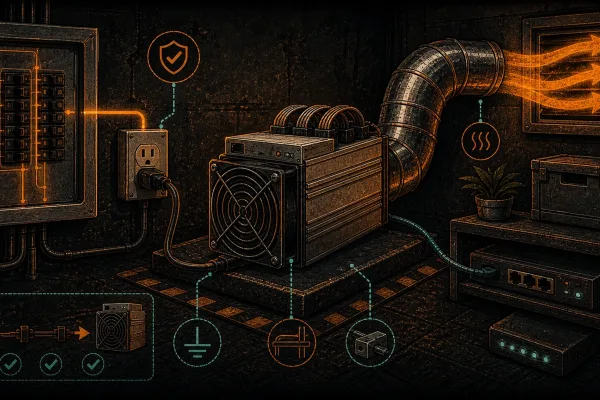
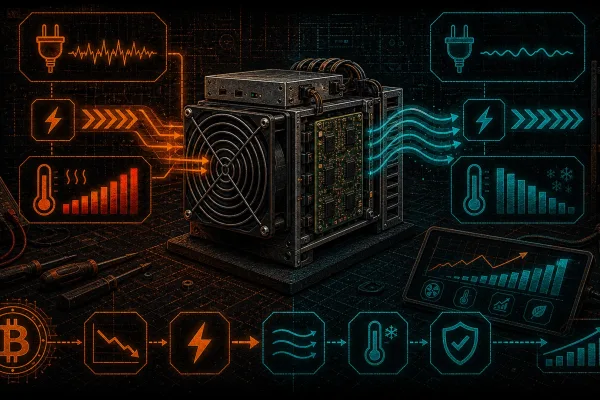
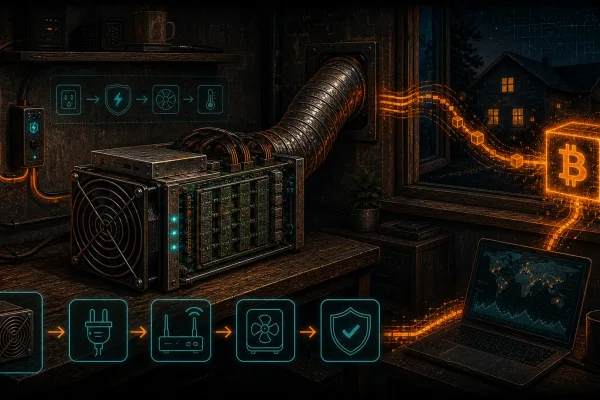
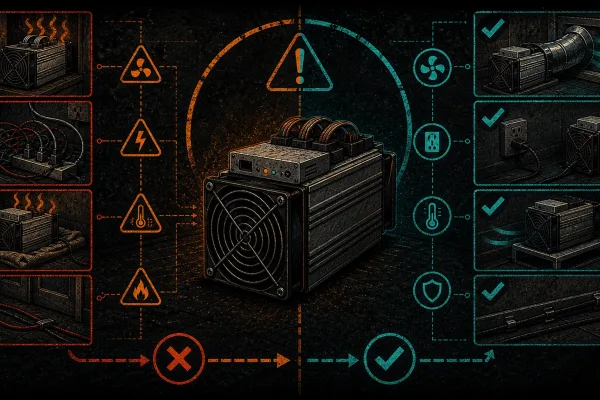
A document-first checklist for collecting equipment nameplate evidence and handing circuit, permit, load, and installation decisions to the local authority and a Licensed Electrical Contractor.
Everything you need to mine Bitcoin at home. Noise management, heat recovery with space heaters, power optimization, equipment selection, and real-world setup guides from home mining pioneers.
A document-first checklist for collecting equipment nameplate evidence and handing circuit, permit, load, and installation decisions to the local authority and a Licensed Electrical Contractor.
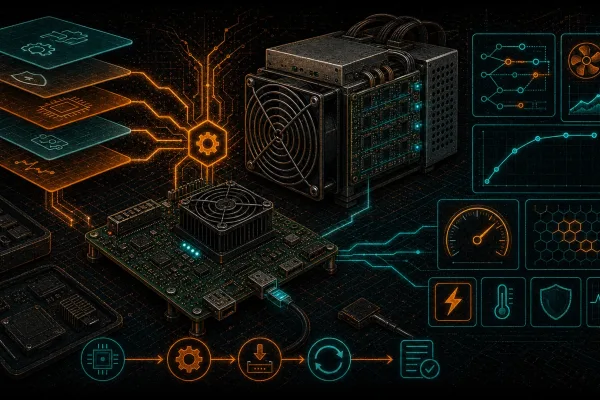
Your Antminer shipped with Bitmain’s stock firmware. It runs at a fixed frequency, pulls a fixed wattage, and requires a 240V circuit that most North American homes do not have.
A Bitcoin space heater is not a desk lamp. It is a serious electrical appliance that draws between 800W and 3,250W of continuous power — 24 hours a day, 7 days a week, for months on end…
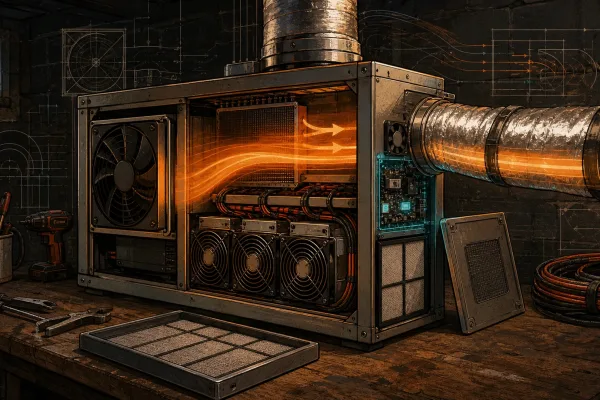
Every ASIC miner ships with the same cooling strategy: move massive volumes of air across heatsinks using fans that sound like a jet turbine at close range. It works.
Yes. You absolutely can mine Bitcoin in an apartment. People do it every day — from studio apartments in Toronto to two-bedroom units in Montreal.
Every watt of electricity that enters an ASIC miner exits as heat. That is not a design flaw — it is thermodynamics. A Bitcoin space heater is simply the honest acknowledgment of this…
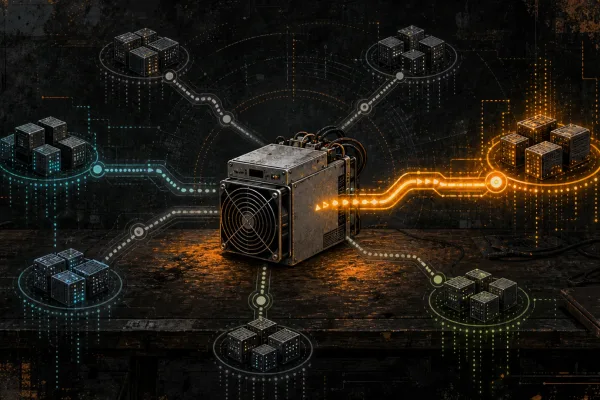
Every ten minutes, the Bitcoin network mints a new block. Roughly 3.125 BTC in block subsidy plus transaction fees flow to whichever miner solves the cryptographic puzzle first.
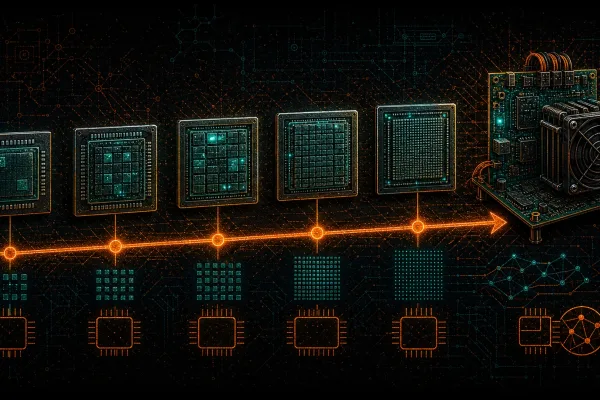
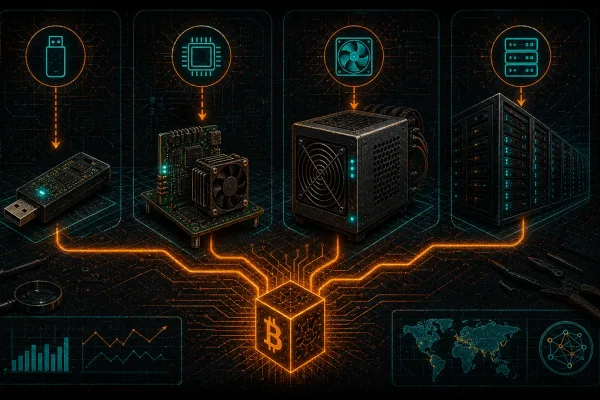
Every Bitcoin miner on the planet — from a single Bitaxe on a desk in Montreal to a warehouse full of S21 Pros in West Texas — runs on a tiny sliver of custom silicon.
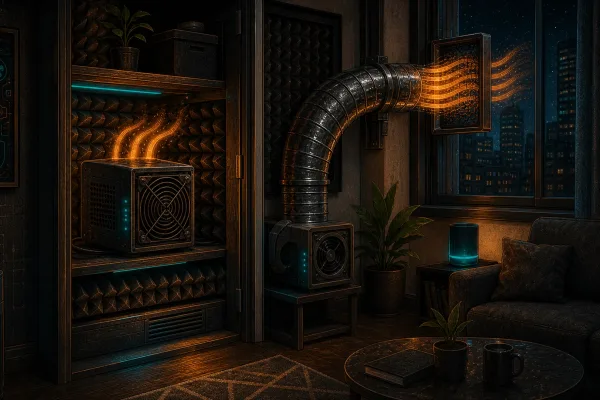
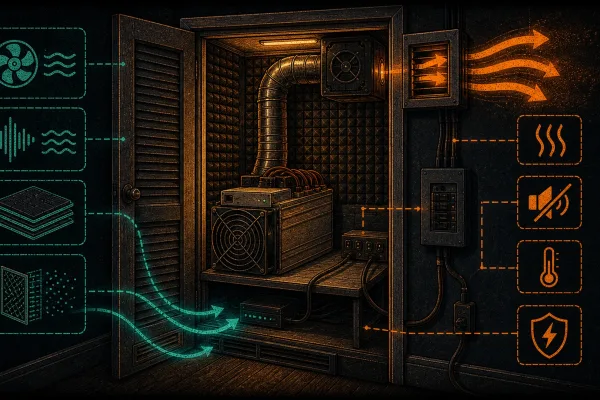
An ASIC miner on your desk sounds like standing next to a leaf blower. An ASIC miner in a properly built mining closet sounds like a distant hum.
Your Antminer was built for a data center. It was designed to run at maximum power in a temperature-controlled warehouse with dedicated 240V circuits, industrial cooling, and nobody living…
Everything you need to mine Bitcoin at home — hardware selection, electrical setup, noise management, heat recovery, pool configuration, and optimization. From USB-powered Bitaxe solo miners to full ASIC rigs heating your garage.
The landscape of cryptocurrency mining has undergone a remarkable transformation since the inception of Bitcoin in 2009. Initially, enthusiasts could mine cryptocurrencies using standard…
Bitcoin mining, the process of validating transactions and securing the Bitcoin network, is a fundamental aspect of the cryptocurrency’s infrastructure.
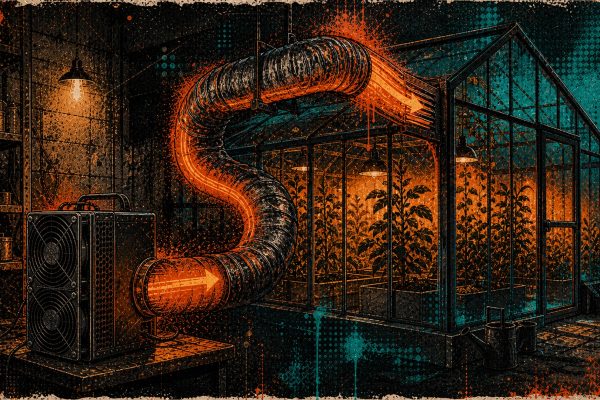
An ASIC miner is essentially a 1:1 electric heater that also earns Bitcoin. Here is how to reuse that waste heat to hold a greenhouse above freezing through a Canadian winter.
Bitcoin mining, the process by which new bitcoins are entered into circulation and transactions are confirmed across the network, has become a significant technological and economic phenomenon.
The global fitness industry is witnessing a fascinating intersection of two seemingly unrelated fields: cryptocurrency mining and energy efficiency.
It’s no secret that Bitcoin mining can be a controversial topic. From its significant energy consumption to its potential environmental impact, it’s easy to see why some may have…
Bitcoin mining has become a popular process for validating transactions and securing the digital currency network. However, the energy required for this process has led to high electricity…
The quest for a reliable store of wealth has led investors to weigh asset classes, each with its own unique set of advantages and disadvantages.
Let’s be honest: most “Bitcoin gift” lists are garbage. They link you to the same mass-produced Amazon mugs, the same generic crypto t-shirts printed on Alibaba blanks, and the same plastic…
Build the ultimate Bitcoin desk setup and crypto office. From 3D-printed decor and figurines to Bitaxe solo miners and Bitcoin space heaters — everything you need for the perfect Bitcoin man cave. All products 3D-printed in Canada by D-Central Technologies.
A neutral guide to Bitaxe hardware and firmware boundaries, revision evidence, measured performance, pool and solo roles, probability, and safe setup checks.
The Bitcoin halving is the most predictable yet most consequential event in mining. Every 210,000 blocks, the block subsidy gets cut in half — and…
Noise is the single biggest obstacle between you and mining Bitcoin at home. A stock Antminer S19 screams at 75 dB — the same volume…
Does Home Insurance Cover Bitcoin Mining Equipment? Here is the short, uncomfortable answer: probably not enough, and possibly not at all. Most standard homeowner insurance…
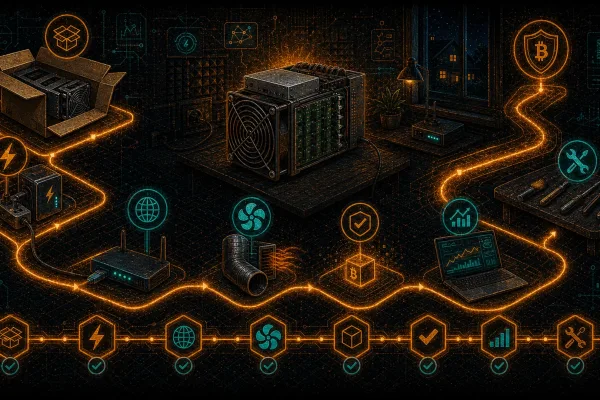
Build a Bitcoin mining setup: choose the site before the miner A mining setup is a continuous electrical and thermal load, not just a miner…
Every year, thousands of new miners make the same preventable mistakes — costing them hundreds or even thousands of dollars, frying hardware, and in worst…
You plugged in your first miner. The fans spun up. A green light appeared on the dashboard. And now you are staring at numbers you…
One of the most compelling aspects of Bitaxe solo miners is their remarkably low power consumption. Unlike industrial ASICs that devour 3,000+ watts and require…
Running a Bitcoin full node is not optional — it is the foundation of sovereignty. Without your own node, you are trusting someone else to…
Last reviewed April 16, 2026.